|
Long considered quaint artifacts from the past of no value except for partially reconstructed stories conveyed by some vestiges found within, the circles real purposes, extinct, forgotten and considered useless, are truly climate monitoring instruments of great precision and elegance. Stone circles, despite being ancient, are by their very nature usable today, because they are circles. Part of various styled standing stones are also of great value, they may help foretell important local astronomical events. Most would be out of sync with today’s sky, but this can be worked around quite easily. Our ancestors picked locations for those circles with a purpose in mind, they were extremely effective observatories, dedicated for the study of the worlds. They were so useful as to be essential, a collective instrument, not just a temple for abstract religious practices, they were a tool to understand the sky for certain, definitely used as a burial ground, a keeper of time for the dead and the living with so many other yet to be rediscovered uses. Only by a reviving the circles will we find them out. The only thing pagan about the circles are the religions that killed their usefulness. Long ago, being instruments of reason, like Galileo’s telescope, they were heretic, magical, not for religious dominance. Today, many circle sites are said to be places of the devil. The devil is really found in ignorance, abject stupidity, common practice during medieval days, a dominant popular belief which has transcended into lurid stories of torture and death. Even today, thinking otherwise would be daring. Our ancients were enlightened people, rejecting religious hegemony in favor of science and very local religions. A single standing rock in a circle has meaning to be found, the re-discoverer who finds its purpose becomes part of the circle, becomes this instrument. Akin to a Captain steering his ship, one without the other is a drift, useless. So are the circles today, they attract tourists, who incidentally, by default become temporary circle wizards, since no other person uses them. Archaeologists have their own programs to follow, they are not trying to practice the circles, they are rather like important commentators of what circles may have been. Nevertheless, there should be a huge debt of gratitude to archeology for preserving many ancient sites otherwise to have been turned into car parks. This debt, long overdue, should be paid in terms of more research and preservation grants. Simple stones placed during ancient times demarcate fix points of references, fixed on Earth dedicated to the sky, an interaction for the local Wizards to know. The connection made, information acquired from the sky is passed to the community. Given a good entente between the circle Wizard and near by villages, everyone was well informed. Nowadays, this task is assigned to various media whom, more or less, inform the public about the very same events, however it is likely that the circles helped divulge information not gathered today. It is for this reason that the circles need to be revived. They are the finest instruments for climate studies ever made prior to the 19th century. What they offer today, is an old-new way to study local environments. What they saw People of the circles engaged in astronomy while using the horizon in a form of Earth-Sky linkage. Stonehenge may be a place where there was two horizons. The daily play between stars, planets, moon and sun with the horizon was really a way to understand the air and the earth. Today, practitioners have not really disappeared. Major circle events are subconsciously passed on from one young generation to the next. They continue to this day, of which the biggest event is the summer solstice, but during ancient times it was likely that winter solstice and equinox were more vital, for winter observations gave away the coming year. During each winter, the low sun, mostly weak, incapable of melting snow, allows darkness to create cold weather. March equinox then becomes a most important time. After a long period of cold air production, the quantity and quality of cold air achieved can be analyzed. The complexity of UK and Ireland weather having cold winter islands amidst a warmer ocean enabled the horizon sun to have several distinguishable geometric features, each omens for the coming times. The first most important act in demarcation came from defining the breadth of displacement of the sun at its extremes. During winter, the sun covers a smaller arc of the circle. At winter solstice the circle creator demarcated the shortest day of the year with a stone at the Southeast for sunrise, a stone at Southwest for sunset. The same thing happens at summer solstice, except the markers are placed at the Northeast and Northwest. 4 stones define two important days. These markers are set for practical local reasons. The tragedy in circle practice abandonment in ancient days offered a gift to us, no longer attended, the stones became a climate time capsule of great importance.
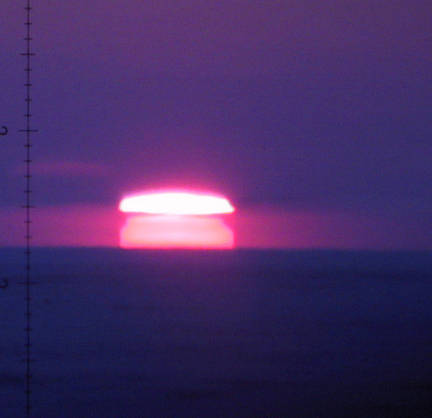
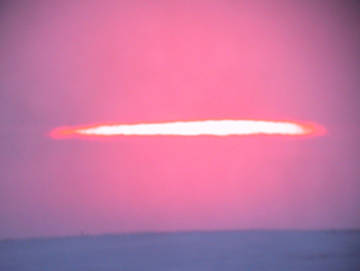
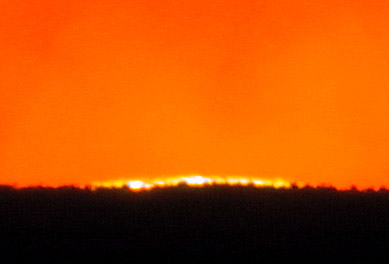
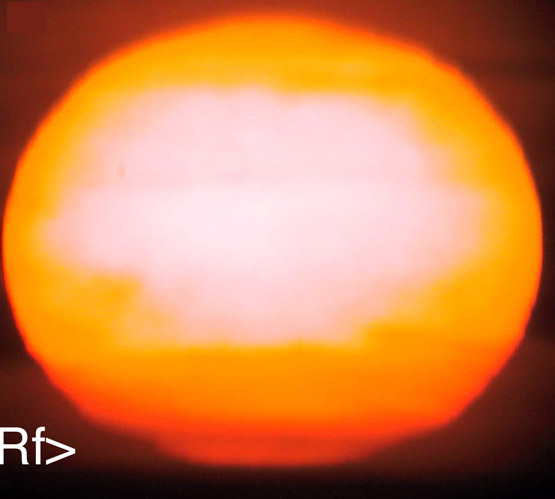
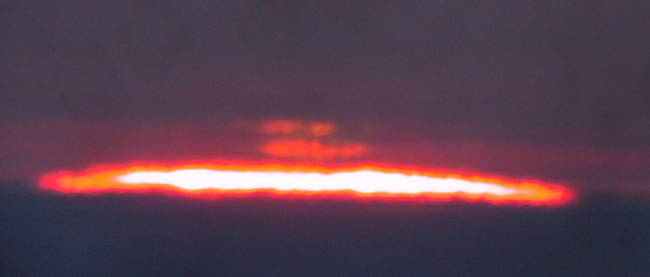
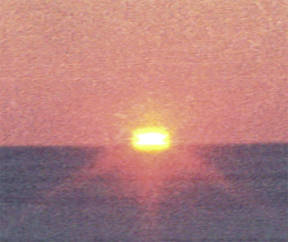
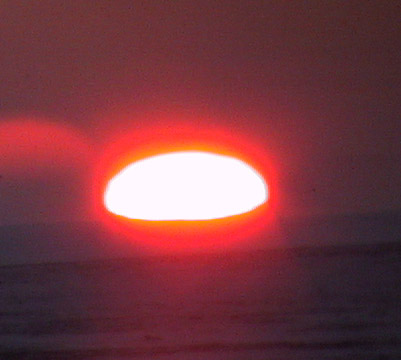
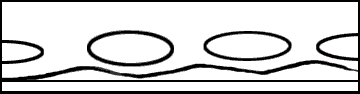
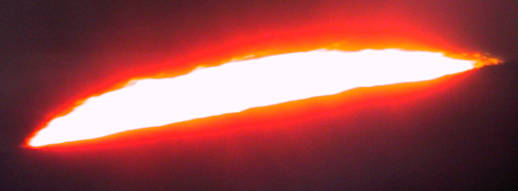
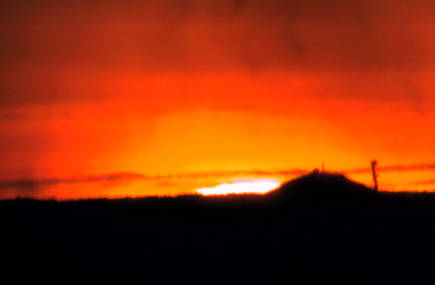
What we can see: As world wide climate changes drastically, usage of stone circles are more and more essential, even if observation days are rare. Clear sky observations, however infrequent, still can give off a huge quantity of information. Placing the circles in ancient times was not hap hazard, left at random, they were selected by the very best scientists of the era, with local knowledge about environmental conditions way beyond what we understand today. Reviving the circles would mean a potential for regaining the very reasons for their placements. Stonehenge and other ancient circles need not to be trampled upon. Adjoining very close by identical circles can be started, from such a reconstruction, rediscovering the past may lead the way to foretelling the future. The easiest method to see how times have changed is to look at old circle solstice markers, and to recreate a circle having the same diameter and actually redo the solstice markers with today’s sun positions. This would tell whether it got warmer or colder since the circles were made. Doing a circle requires some visible horizon, the best henge to imitate would be on a plateau (Stonehenge), hill (as with numerous circles), or sea coast (Seahenge). Having a perfect 360 degree horizon is not necessary, having an old circle nearby is. Comparing results between ancestral circles and present day ones will unlock a few secrets kept by the old ones as well. A few years observations can literally reveal a gradual but certain progression of warming or cooling in the atmosphere. This can be done by a phenomenon called skimming. The more it is cold, the more the sun or moon will skim the horizon at sunrise or sunset. In the Polar regions, skimming can occur for several minutes sometimes hours. In temperate climatic zones skimming happens much quicker, in seconds or minutes. Every second of skimming translates in a longer arc distance at the perimeter of the circle which can be marked by simple stones for the beginning or end of any day. Skimming is only one practice from amongst many other possible techniques which can be observed and marked. Circles today lie dormant, awaiting renewal. In the midst of the greatest climate changes faced by the Earth outside of its normal precession cycles, there is no better instrument in the world which can literally show climate change directly to people. Stonehenge and all other circles need to be revived. We must do as our ancestors did, we must be aware of our Environment. Stonehenge NOW Altar Stone - Horizon Megaliths - Vision Reconstructions |
||||||||||||||||||||||||||||
|
|
||||||||||||||||||||||||||||